Discover how children in Ghana are using coconut branches to build toy cars, unlocking vital STEM learning and fine motor skills. This hands-on lesson proves sustainable education doesn’t require expensive technology. Read how local resourcefulness and your donations are shaping the next generation of innovators.
GHANA STEM LEARNING OLD SCHOOL: MAKING A CAR WITH A COCONUT BRANCH (WITH VIDEO)
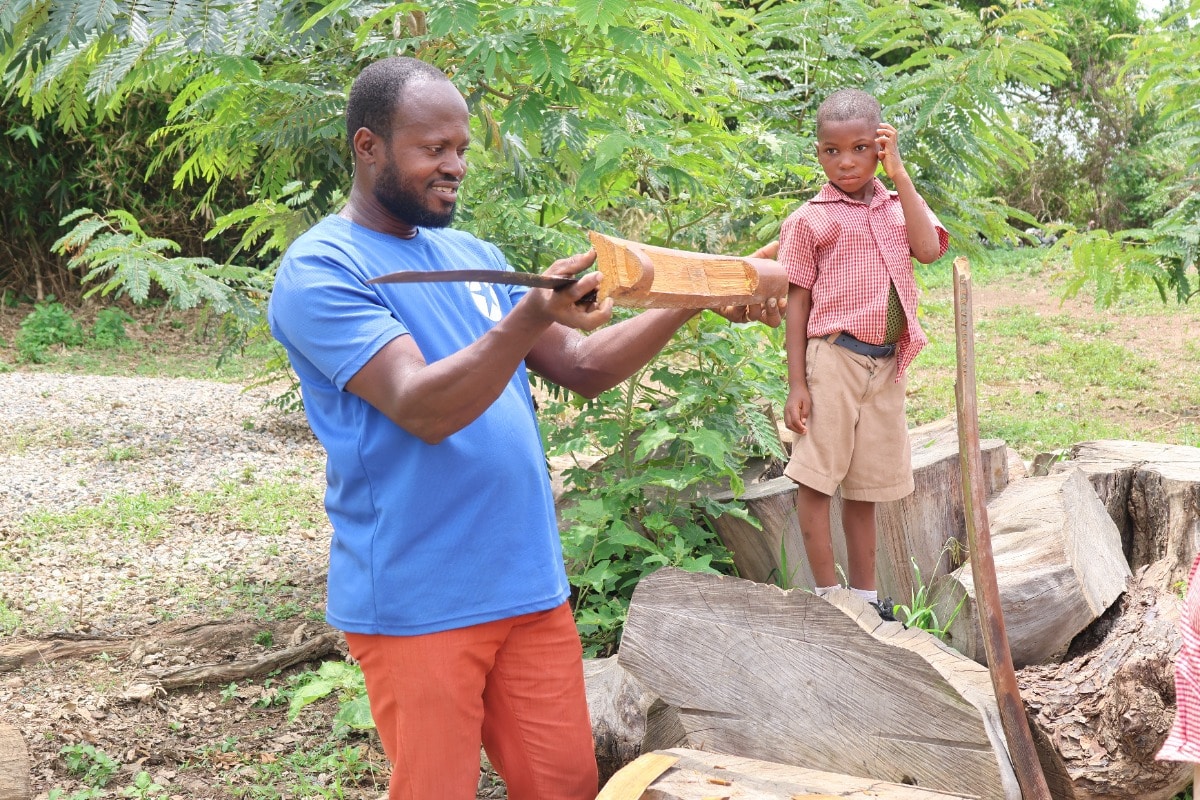
Today’s lesson was a hands-on creative activity where the teacher taught the children how to make a simple toy car using a coconut branch all while invoking STEM learning.
To make the car, a coconut branch was carefully cut, and the top flat part was shaped to form the body of the car. To complete the model, bottle caps were used as wheels, and a thread was tied to the car to help pull and move it. After finishing the activity, the teacher took the children outside to play with their handmade cars, and the children were very happy as they watched their cars move.
While this activity brought immense joy and laughter to the classroom, it represents far more than just a fun afternoon. In resource-limited environments, lessons like these are foundational milestones for a child’s holistic development. By transforming natural materials and recycled items into functioning toys, these children are engaging in deep, experiential learning that shapes their minds and futures in several profound ways.
Cognitive and Developmental Benefits
When a child sits down to carve a coconut branch or align bottle caps, their brain is working in overdrive. This simple crafting session is a masterclass in childhood development:
Fine Motor Skills and Hand-Eye Coordination: Cutting the branch, shaping the wood, piercing the bottle caps, and threading the string require precise movements. These actions strengthen the small muscles in children’s hands and fingers, which are critical for tasks like writing, using tools, and everyday self-care.
Spatial Awareness and Engineering Concepts: Transforming a 3D branch into a balanced, rolling vehicle forces children to understand basic physics and geometry. They must figure out where to place the wheels so the car doesn’t flip and how to tie the string to ensure it pulls straight.
Problem-Solving and Critical Thinking: Not every toy car works perfectly on the first try. If a wheel falls off or the axle is crooked, the child must troubleshoot. This trial-and-error process builds cognitive flexibility and resilience, teaching them that failure is just a step toward a solution.
Psychological and Emotional Growth
The emotional impact of creating something with your own two hands cannot be overstated. For these children, the true magic happens when they step outside to play.
Boosted Self-Esteem: There is a unique pride in playing with a toy you built yourself. Seeing their creations actually roll across the dirt instills a deep sense of capability and confidence in these kids.
Encouraging Resourcefulness: This lesson teaches children that they do not need expensive, store-bought plastic toys to have fun or to learn. It empowers them to look at their natural environment—and even discarded items like bottle caps—not as waste, but as a canvas for endless imagination.
Broader Economic and Environmental Impact
On a larger scale, this traditional practice carries subtle but vital economic and environmental lessons for the community’s future:
The Foundation of Grassroots Innovation: Many of the world’s greatest engineers and entrepreneurs started by tinkering with scraps. By fostering this inventive mindset early on, we are cultivating the next generation of Ghanaian problem-solvers who can look at local materials and create sustainable, low-cost solutions for their communities.
Eco-Friendly and Sustainable Play: Using biodegradable coconut branches and upcycling plastic bottle caps keeps waste out of the environment. It teaches the children the value of circular economy principles—reusing and recycling—at a very young age.
This beautiful blend of education, play, and culture is only possible because of people like you. By supporting our classrooms, you aren’t just funding lessons; you are fueling imagination, building confidence, and shaping a brighter tomorrow.
THANK YOU TO ALL SPONSORS AND DONORS FOR YOUR CONTINUOUS SUPPORT!!